10 Best AI SEO Software Picks for 2026
A potential customer can now ask ChatGPT whether your company is credible, compare you to two competitors, and get a confident answer without ever visiting Google. That answer can shape a shortlist, kill trust, or send demand to a rival. For a lot of teams, that's the moment when traditional SEO reporting starts to feel incomplete.
The category has shifted fast. HubSpot's coverage of AI SEO points to a real change in what leading platforms do: Semrush now uses Copilot to surface prioritized SEO insights, and its AI Overview Tracking watches how keywords appear in Google's AI Overviews, which sources get cited, and how that affects organic performance. In the same comparison, HubSpot lists Semrush at $139.95/month and Surfer SEO at $219/month. That pricing snapshot matters less than what it signals. The best ai seo software is no longer just about keyword clustering and content scoring. It's about visibility inside AI-generated answers.
That shift is why teams are splitting their stack into new roles. Some tools are still best for content optimization. Some are best for automation. Some now specialize in tracking how AI systems represent your brand across ChatGPT, Claude, Gemini, Perplexity, and Google AI Overviews. If you want the bigger context behind that shift, this guide to AI marketing for businesses is a useful companion.
Below are the tools I'd shortlist right now, grouped by what they're good at in practice.
1. promptposition
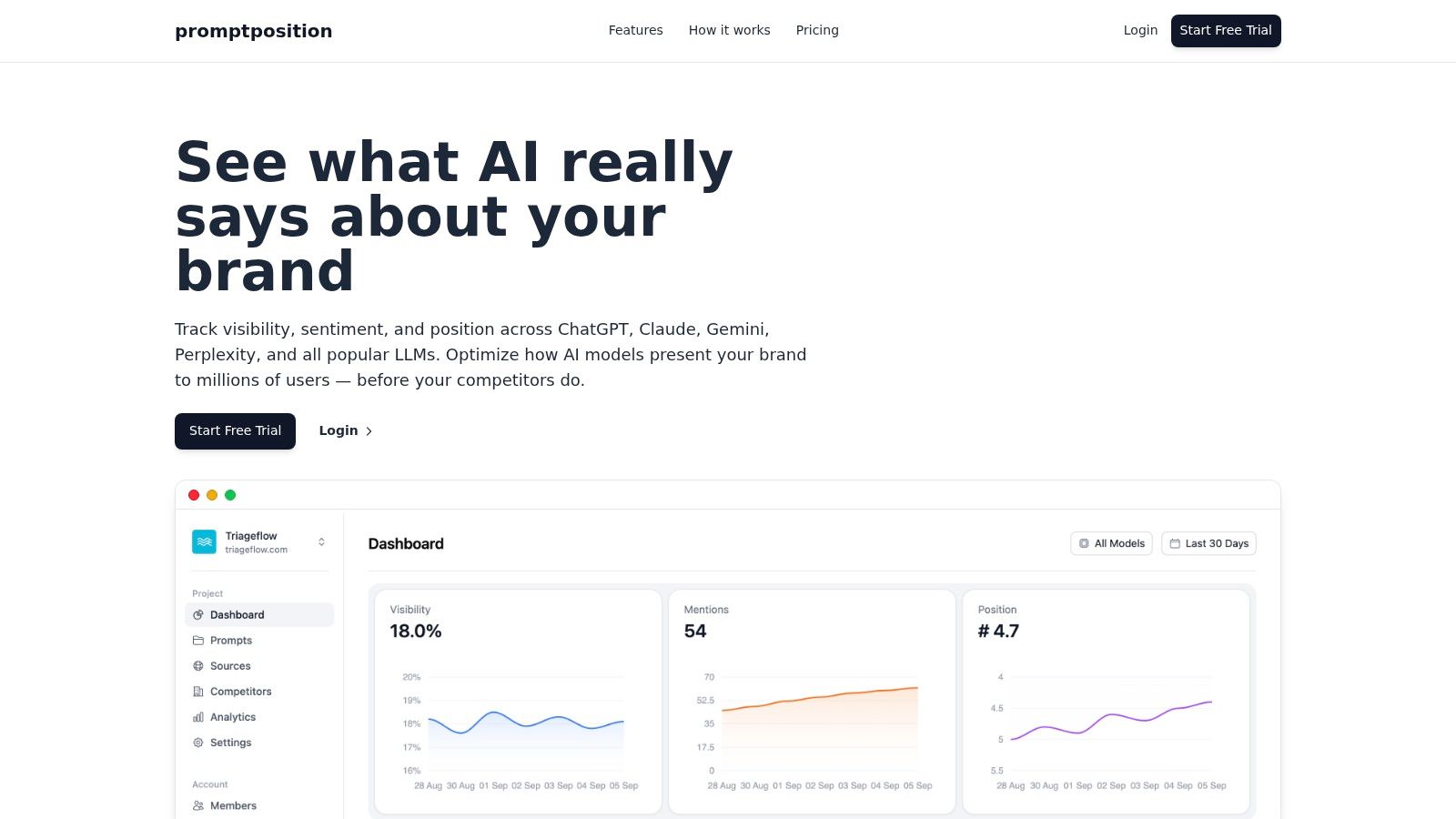
A prospect asks ChatGPT for the top vendors in your category, compares you with two competitors, and gets an answer that sounds certain. If your team cannot see that answer, the sources behind it, or how often your brand shows up, you are missing a real part of search visibility. promptposition is built for that job.
This tool belongs in the visibility monitoring bucket, with a clear GEO angle. It tracks how AI systems describe your brand across models like ChatGPT, Claude, Gemini, Perplexity, Grok, and DeepSeek. Instead of starting from pages and rankings, it starts from prompts, model responses, citations, sentiment, and competitive presence.
That difference matters in practice. SEO teams can use it to spot citation gaps and weak topic coverage. Brand and PR teams can use it to see whether AI answers frame the company accurately, mention the right proof points, and pull from sources they want associated with the brand.
Where it stands out
The useful part is not just that it stores model outputs. It shows which sources appear to shape those outputs, including sites like Reddit, YouTube, Medium, TechCrunch, and Wikipedia. That gives teams something to act on. If AI answers keep citing third-party reviews, forums, or outdated articles, the response is not “write another blog post and hope.” It may be a PR fix, a documentation fix, or a content distribution fix.
If you want a practical companion to that workflow, this guide to AI-driven content optimization pairs well with prompt and citation analysis.
Practical rule: If leadership cares about reputation, competitive framing, or source-level visibility in AI answers, a GEO monitoring tool will often surface more useful insight than another content scorer.
Pricing is straightforward. Plans start at $49 per month, with higher tiers for larger prompt volumes, broader monitoring limits, and API access.
Best for and trade-offs
promptposition is a strong fit for teams that need a dedicated AI visibility layer in the stack. For in-house SEO leads, it helps answer a question traditional rank tracking cannot answer well: where are we being cited, summarized, or ignored inside AI responses? For brand and PR teams, it is one of the few tools here that feels built around message control and reputation monitoring instead of being adapted from an on-page editor. Agencies can also use it well, especially when clients are asking about AI Overviews, LLM mentions, and share of voice across answer engines.
The trade-off is setup quality. Bad prompts produce weak monitoring. Teams need to define the right prompt set by use case, competitor group, and buying stage. It also runs on a daily monitoring cadence, so it is better for pattern tracking and reporting than for real-time alerting.
Use promptposition when the problem is visibility inside AI answers. Use something else when the primary job is content production, technical SEO, or backlink research.
2. Surfer
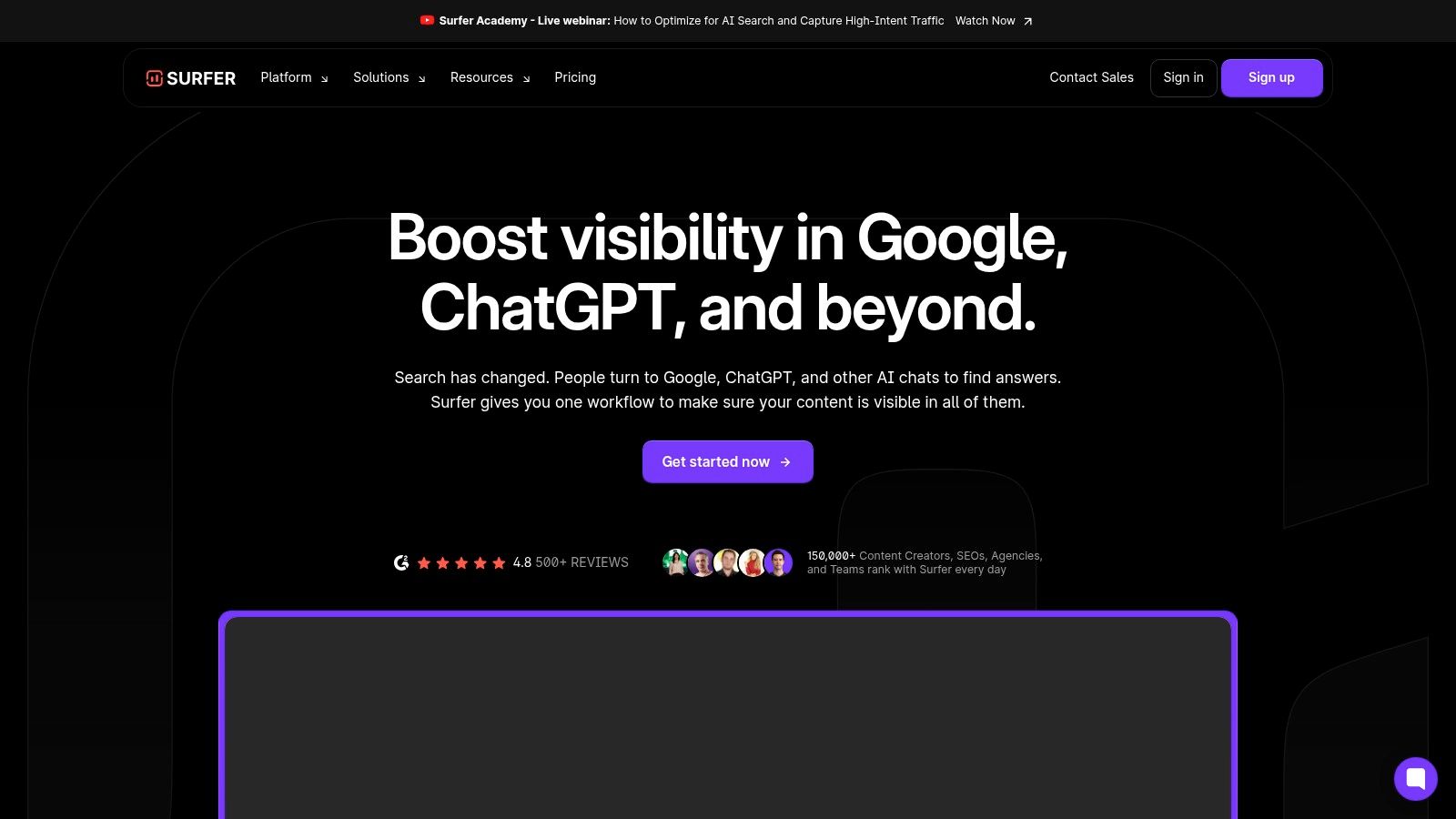
Surfer is still one of the easiest ways to make content teams more consistent. If your writers need a strong brief, live optimization guidance, and a clear definition of “good enough to publish,” Surfer usually gets adopted quickly.
Its strength is prescriptive on-page work. Open the editor, work through the scoring guidance, tighten topic coverage, and ship cleaner pages faster. For teams trying to standardize production, that matters more than novelty.
Where Surfer works best
Surfer now spans more than just the editor. It covers topical planning, content audits, site monitoring, and AI search visibility tracking. That broader scope makes it more useful than the old version of the product that many people still picture.
If your team is trying to connect article quality with stronger AI-era content practices, this piece on AI-driven content optimization is a good companion to the Surfer workflow.
A practical limitation: Surfer is strongest when your process already revolves around publishing and updating content. If technical SEO, deep backlink analysis, or multi-channel reporting are the center of gravity, it won't replace a full suite.
Surfer is best when you want editors and SEO leads working in the same interface. It's less compelling if your biggest problem is brand representation in AI answers rather than page quality.
The plan structure also rewards teams that commit and manage credits carefully. That's normal for this category, but buyers should plan around usage, not just sticker price.
3. Clearscope
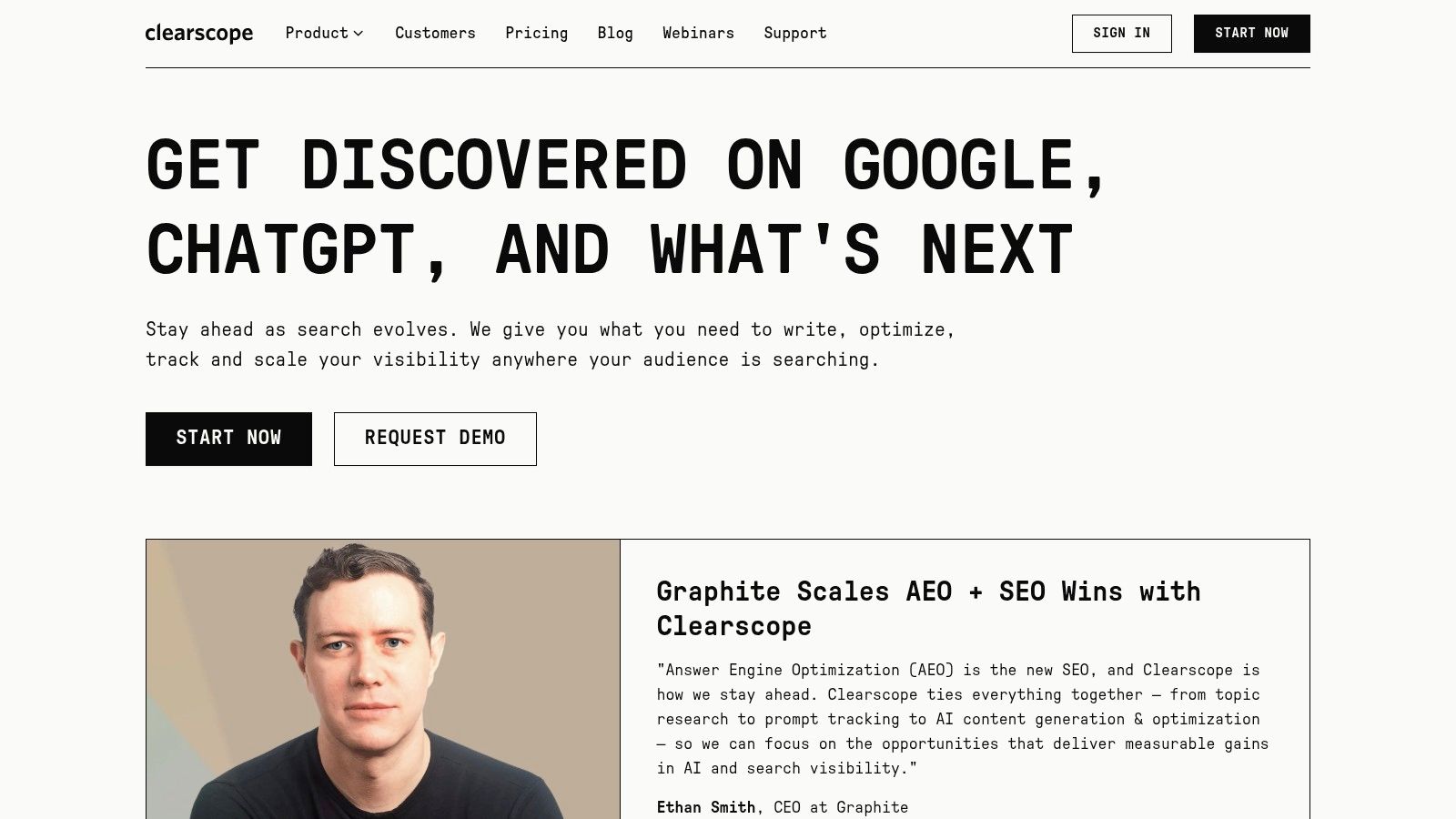
Clearscope remains one of the cleanest premium tools for content optimization. Writers usually understand it fast. Editors trust the scoring. Agencies like it because it creates a repeatable standard without much hand-holding.
Its primary value isn't that it tells you to add related terms. Plenty of tools do that. Clearscope is useful because it keeps editorial operations focused on relevance and completeness without cluttering the process.
Who should buy it
If your SEO program depends on many contributors, especially freelance writers or subject matter experts, Clearscope is easy to operationalize. The Google Docs and WordPress integrations help, and the tracked topics/pages view is useful for keeping an inventory of what's already optimized.
Its limitation is straightforward. It's not a full SEO operating system. You'll still need broader tools for technical audits, backlink intelligence, and increasingly, AI-search visibility monitoring.
That trade-off is fine for mature editorial teams. It's less fine for a small in-house team hoping one subscription solves everything. In that case, Clearscope often works best as the quality layer inside a broader stack.
4. MarketMuse by Siteimprove
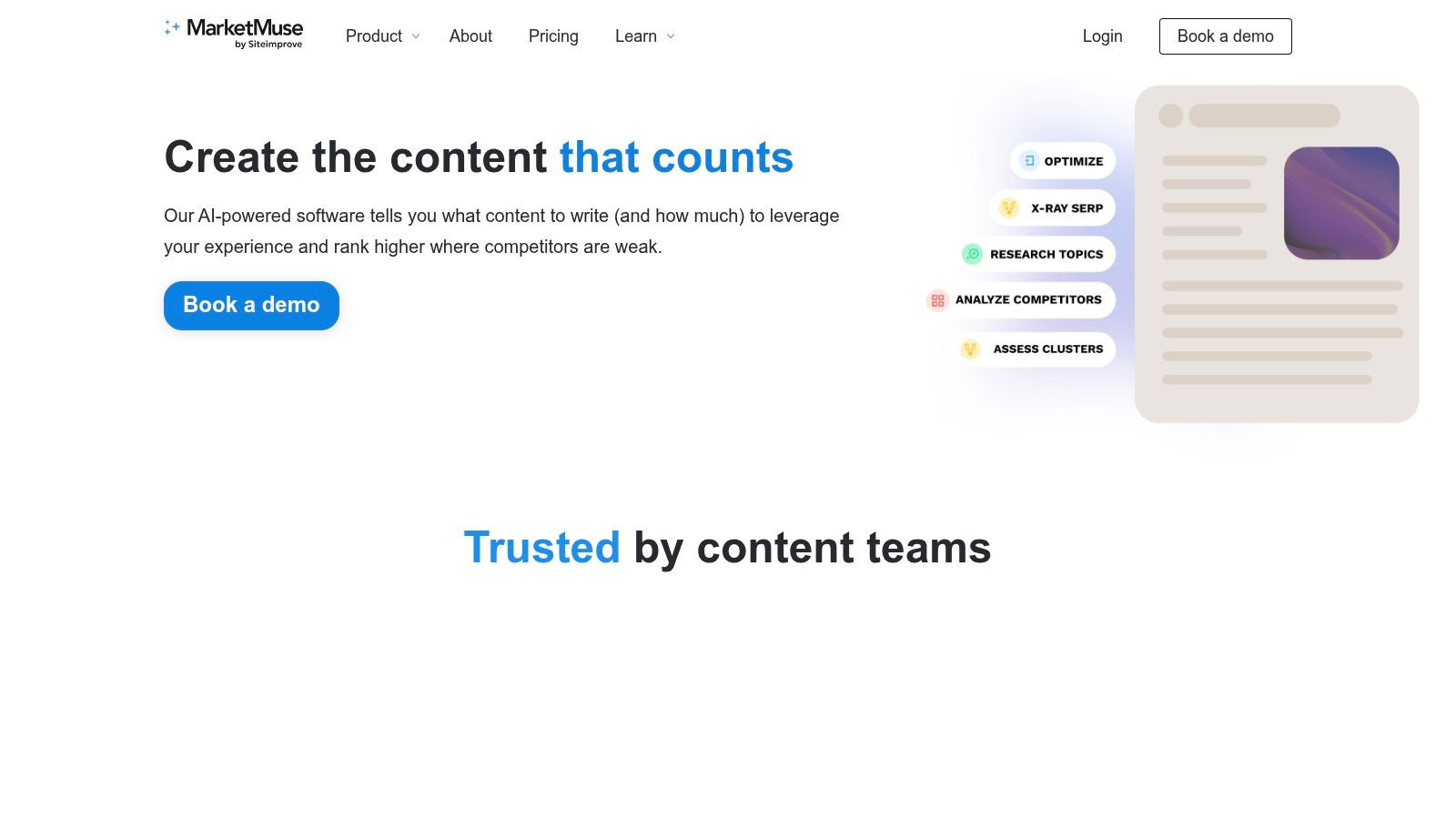
MarketMuse is for teams that don't just need to improve a page. They need to decide what to publish next, which clusters matter, and where topical authority is thin across an entire site.
That makes it more strategic than many content optimization tools. It can feel heavier at first, but for large sites, that depth is the point.
Best for portfolio-level strategy
MarketMuse is strongest when you're managing content as a system. It helps identify topic gaps, build briefs, prioritize updates, and map authority opportunities at the site level. If you run a content-rich B2B site, media property, or multi-client agency operation, that view is hard to replace.
Its value is also tied to how seriously your team takes AEO and GEO. If you're still defining the shift, this overview of answer engine optimization gives useful context for why portfolio-level content planning now matters beyond Google rankings.
The downside is simple. If all you need is a fast way to tune an article before publishing, MarketMuse can feel like too much software. It rewards teams that think in clusters, roadmaps, and domain authority, not just article-level edits.
5. Frase
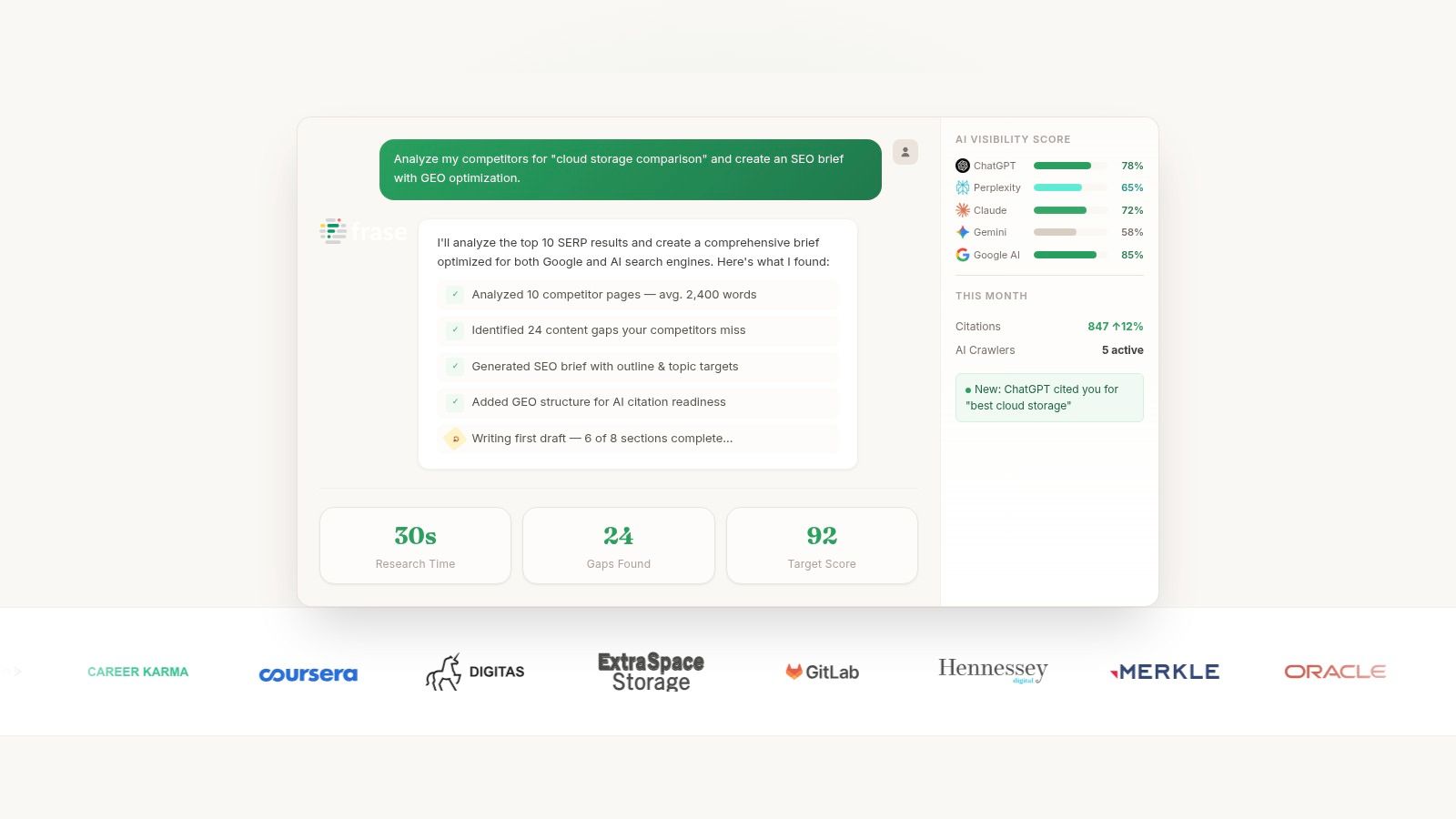
Frase is one of the more practical all-in-one options for smaller teams. It combines research, brief creation, drafting, optimization, and AI visibility tracking in a workflow that makes sense without much setup.
That matters because a lot of teams don't need the “best” specialist in every subcategory. They need one tool that gets the work moving.
What it does well
Frase is useful when the same person is often doing research, outlining, drafting, and optimization. The AI Agent, content workflow features, and optimization layer reduce handoffs. That's efficient for lean internal teams and consultants.
It also covers GEO-oriented monitoring, which makes it more current than older content tools that still behave as if classic blue-link SEO is the whole job.
The trade-off is depth. If you compare it against a specialist content optimizer or a large enterprise suite, Frase usually wins on convenience and loses on advanced control. That's not a flaw. It's a choice. For many SMB teams, convenience wins.
6. Scalenut
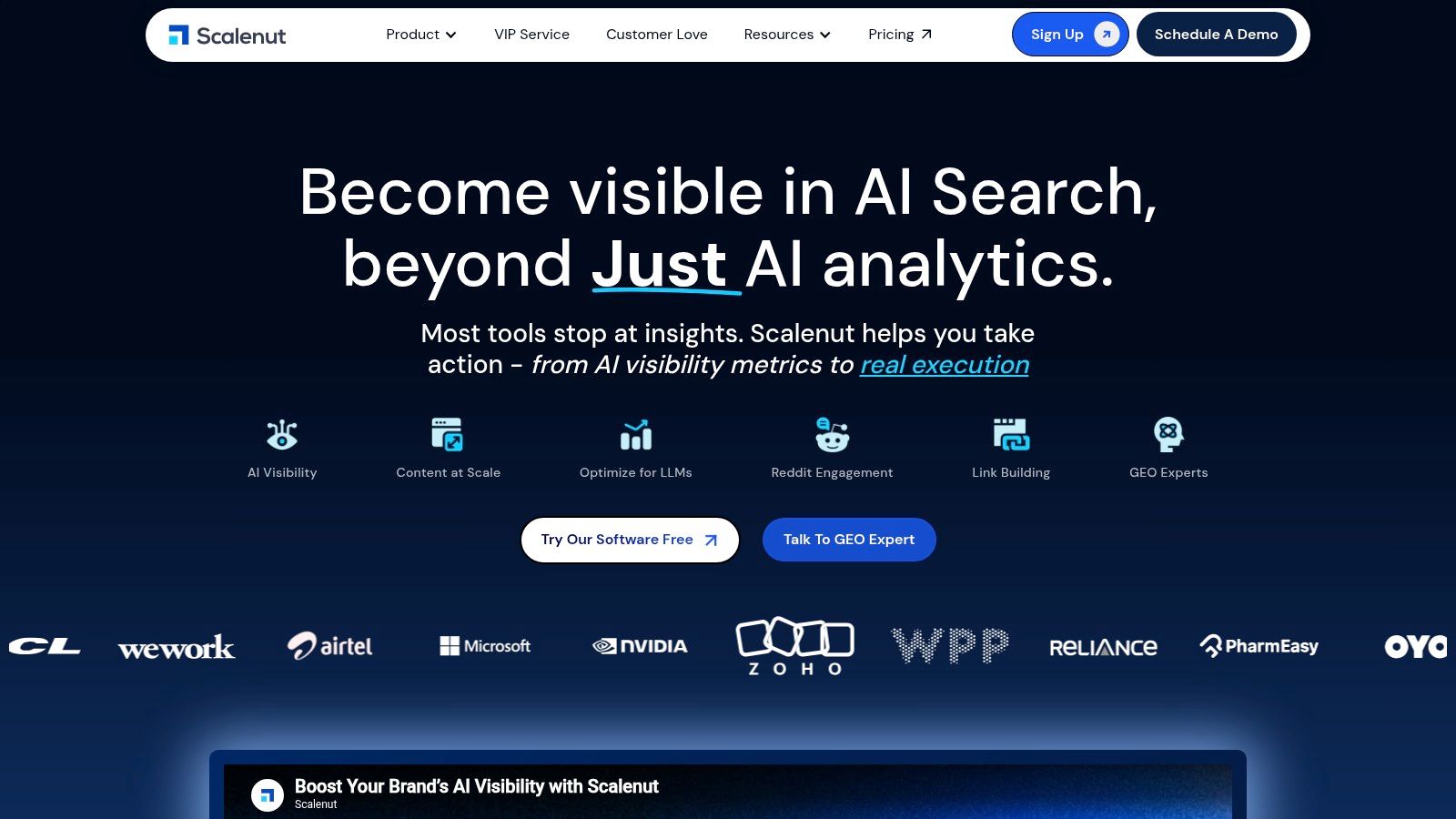
A common Scalenut buyer is already tired of tool sprawl. The team has one app for briefs, another for optimization, a spreadsheet for cannibalization, and a CMS workflow that slows publishing. Scalenut is built for that situation.
Scalenut is one of the clearer all-in-one plays in this category. It covers planning, drafting, optimization, audits, internal linking support, and publishing in a single system. That makes it a practical fit for content-led SEO teams, agencies managing repeatable production, and brand teams trying to publish faster without rebuilding their process around multiple vendors.
Best for fast-moving production teams
Scalenut's value is breadth tied to execution. You get long-form AI writing, NLP-driven optimization, keyword clustering, cannibalization checks, on-page audits, and CMS publishing features in one workflow. For teams producing informational pages at scale, that can save real time because strategy and production stay closer together.
That GEO angle also matters. As noted earlier in SeoProfy's 2026 AI SEO statistics, AI Overviews show up often enough on informational searches that content teams now need to think beyond rankings alone. They need pages that can earn citations, support entity clarity, and answer comparison-style queries well. Scalenut is more useful in that environment than older content tools built only for classic on-page scoring.
For role-based use, the fit is fairly clear. SEO teams can use it to move from clustering to page creation faster. Agencies can standardize content ops across client accounts. Brand and PR teams will get less value unless they also own a large editorial program, because Scalenut is stronger in production than in visibility monitoring.
If your team publishes high volumes of informational and commercial-investigation content, Scalenut can help you get output live faster and keep optimization work in one place.
The trade-off is stability. AI products that ship quickly often change credits, workflow details, and positioning just as quickly. Scalenut is useful, but it is the kind of platform that should be tested against your current process, not bought on feature lists alone.
7. Semrush
Semrush is still the safest pick for teams that want one central SEO platform with AI layers added on top. It has broad data coverage, mature reporting, and enough adjacent tooling that many companies can make it the hub of their search stack.
That's also why its weaknesses are easy to tolerate. It doesn't need to be the best pure content editor if it's already the operating center for keyword research, backlink analysis, competitive work, and reporting.
Best as the central stack
HubSpot's recent AI SEO coverage highlights Semrush's current direction well. Copilot surfaces prioritized SEO tasks, and AI Overview Tracking monitors how target keywords appear inside Google's AI Overviews, which sources are cited, and the impact on organic performance. That's one of the clearest examples of a traditional suite adapting to AI-search visibility in a serious way, not just adding a writing layer.
Semrush is a good choice for in-house SEO teams, agencies, and revenue teams that want fewer vendor relationships. If you already live inside Semrush, adding AI-assisted workflows is easier than rebuilding your process around a new niche platform.
The catch is cost creep. Base plans, add-ons, toolkits, and extra modules can stack up fast. Also, if your goal is tightly guided page-level optimization, specialist tools like Surfer or Clearscope often feel sharper in the editor itself.
8. Outranking
A common content ops problem looks like this: the keyword list is ready, the calendar is full, and writers are still waiting on briefs. Outranking is built for that stage of the workflow. It helps teams turn a topic into a structured brief, a workable draft, and an optimization pass without too much handoff friction.
That makes it a practical fit for content-heavy SEO teams, niche publishers, and agencies managing recurring production across many pages.
Built for production, with a clear trade-off
Outranking earns its place when speed matters more than editorial polish in the first pass. Its brief generation is useful, the draft workflow is fast, and the internal linking support helps teams connect new pages to existing clusters without doing all of that manually.
I'd put it in the Content Optimization and Automation bucket, not Visibility Monitoring. It helps produce and refine assets. It does not give the same level of answer-engine or citation tracking you'd use for GEO reporting. Teams that also need to monitor how they appear in AI answers should pair a production tool like this with a dedicated AI search visibility workflow.
The trade-off is control. The interface can feel crowded, and credit usage matters if your publishing volume spikes one month and drops the next. Teams with experienced editors will usually get more value from it than teams hoping the software will fix weak subject matter expertise or unclear positioning.
For agencies, Outranking works well when junior writers need stronger structure. For in-house SEO teams, it helps reduce the lag between research and draft. For brand and PR teams, it is less compelling unless they are publishing search-led content at scale, since its strength is production efficiency, not reputation monitoring or AI-answer presence.
9. NEURONwriter
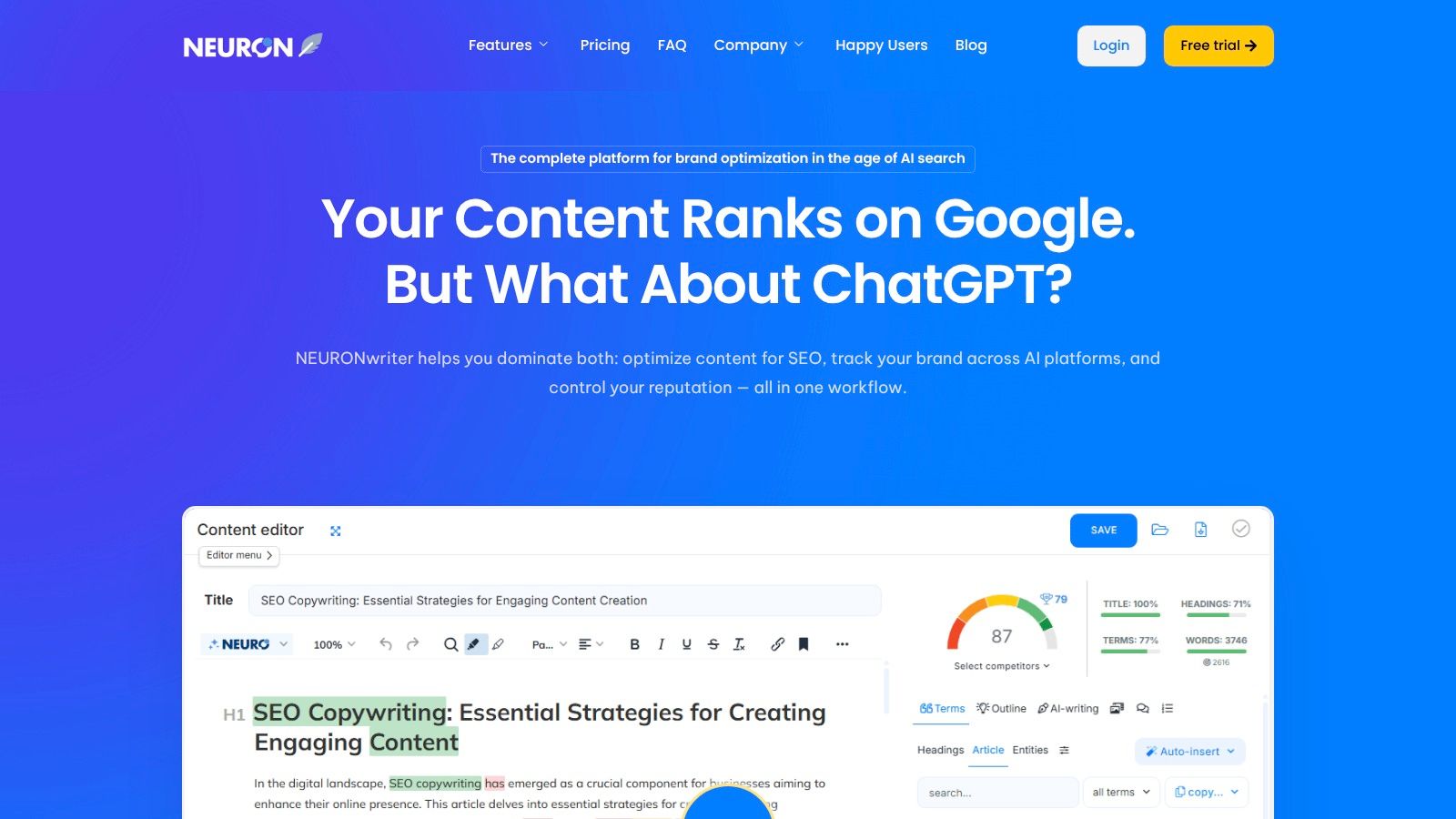
NEURONwriter is one of the easier recommendations for freelancers, solo operators, and smaller agencies. It doesn't try to look like an enterprise command center. It gives you the core semantic optimization workflow at a lower barrier.
That simplicity is part of the appeal. You get NLP term guidance, draft support, integrations, and enough collaboration to be useful without paying for a lot of layers you won't use.
Good budget option, clear ceiling
NEURONwriter can cover the essential “optimize this article” use case very well. For affiliate sites, local publishers, and service businesses with a steady publishing cadence, that's often enough.
Its ceiling shows up when you need stronger site-level strategy, workflow governance, or AI-search monitoring beyond classic on-page optimization. That's where bigger tools pull away.
A budget tool is a good choice when your bottleneck is execution. It's a bad choice when your real problem is unclear positioning, weak authority, or no visibility into AI answers.
For smaller teams, though, NEURONwriter is still one of the better value plays in the category.
10. Alli AI
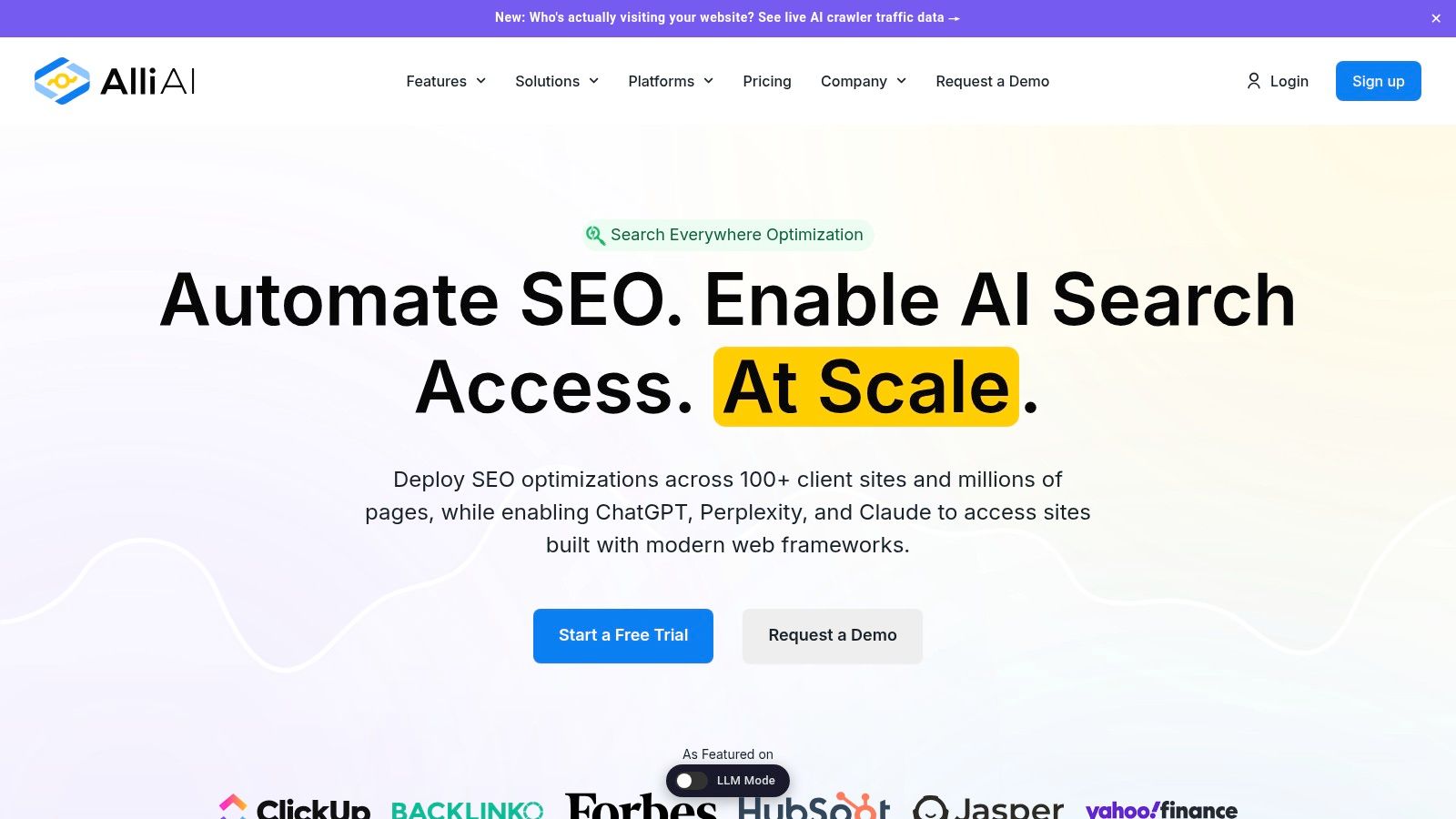
Alli AI belongs in the automation bucket of AI SEO software. It is built for teams that already know what changes they want to make and need a faster way to deploy them across large sites.
That use case is easy to underestimate until a team is staring at thousands of pages, a dev queue that keeps slipping, and a backlog of title, schema, internal linking, and template updates that never ships. For agencies, multi-location brands, and enterprise SEO teams, that operational bottleneck is often the true problem.
Best for deployment-heavy SEO teams
Alli AI handles rule-based on-page updates, internal linking, schema changes, and bulk rollouts through a single implementation layer. Used well, it shortens the gap between strategy and execution.
That makes it a practical fit for a specific type of team:
Brand and PR teams usually need visibility data, citation tracking, and GEO monitoring more than bulk page editing. SEO teams responsible for large sites can use Alli AI to operationalize fixes that would otherwise sit in tickets for weeks. Agencies get the most value when they manage many client sites with repeatable optimization patterns and clear QA processes.
The upside is speed. The risk is scale in the wrong direction.
If the rules are weak, automation spreads weak decisions across hundreds or thousands of pages just as efficiently as it spreads good ones. I would not hand this to a junior team without review workflows, page-level exclusions, and a clear testing process. Alli AI works best when the strategy is already sound and the main constraint is implementation.
It also reflects a broader shift in this category. Some tools help writers improve a page. Some help teams monitor visibility in AI answers and search. Alli AI focuses on execution. That role matters more now because GEO is creating a new split in workflows. One stack measures whether your brand appears in AI-generated results. Another stack pushes the technical and on-page changes that may improve those outcomes over time.
If your team needs an action plan, keep it simple. Brand and PR teams should pair visibility monitoring with message control, not treat Alli AI as a reporting tool. SEO teams should use it for controlled rollouts on templates and internal linking programs. Agencies should standardize playbooks first, then automate the parts that are repetitive and easy to QA.
Alli AI is not the tool I would pick first for briefing writers or building editorial strategy. It is the one I would consider when the SEO roadmap is already clear and execution is where progress stalls.
Top 10 AI SEO Tools Comparison
| Product | Core features ✨ | UX & quality ★ | Pricing & value 💰 | Target audience 👥 | Distinct advantage 🏆 |
|---|---|---|---|---|---|
| promptposition 🏆 | ✨ LLM visibility, Sentiment & Position KPIs; daily scans; source attribution | ★★★★/5, practical workflows, verbatim quotes | 💰 Starter $49/mo → Pro $119/mo → Enterprise $299+/mo; unlimited seats | 👥 Marketing, Brand, PR & SEO teams | 🏆 Actionable AI-search KPIs + competitor gap detection |
| Surfer | ✨ On-page editor, topical maps, audits, AEO/GEO visibility | ★★★★/5, prescriptive scoring, strong onboarding | 💰 Tiered plans; best value annually, credits/limits | 👥 Content teams & SEO owners | ✨ Prescriptive editor + topic planning |
| Clearscope | ✨ Content grading, term suggestions, Docs/WordPress integrations | ★★★★/5, simple UI, consistent scoring | 💰 Premium pricing; team-focused | 👥 Editorial ops & agencies | ✨ Writer-friendly, SERP-aligned guidance |
| MarketMuse | ✨ Topical authority modeling, AI briefs, site inventory | ★★★★/5, strategic, steeper learning curve | 💰 Free tier → paid strategy tiers (limits apply) | 👥 Content strategists & enterprises | ✨ Portfolio-level authority planning |
| Frase | ✨ Research → AI draft → optimize → monitor; AI Agent | ★★★★/5, end-to-end workflow, fast ramp | 💰 Tiered plans; 7-day free trial | 👥 Small–mid teams wanting one workflow | ✨ Replaces multiple point tools (research → write) |
| Scalenut | ✨ GEO/AEO visibility, long-form AI writing, audits, publish | ★★★/5, broad feature set; rapid updates | 💰 Accessible pricing; promo-driven plan changes | 👥 Agencies & multi-domain teams | ✨ GEO framing + CMS auto-publish |
| Semrush | ✨ All-in-one SEO suite + Content Toolkit & Copilot | ★★★★/5, mature data, extensive features | 💰 Tiered; add-ons (AI/toolkits) can raise cost | 👥 Full-stack marketing & SEO teams | ✨ Rich keyword/backlink data + AI helpers |
| Outranking | ✨ AI briefs, multi-draft generation, auto internal linking | ★★★/5, efficient drafting; credit limits | 💰 Competitive lower tiers; credit/document caps | 👥 Small teams producing scaled drafts | ✨ Fast optimized first drafts + auto-linking |
| NEURONwriter | ✨ NLP term guidance, one-click articles, integrations | ★★★/5, budget UI, practical core features | 💰 Budget-friendly; strong price:value | 👥 Freelancers & small agencies | ✨ Best price-to-value for solo/small teams |
| Alli AI | ✨ Rule-based bulk on-page automation, schema & linking | ★★★★/5, powerful at scale; needs governance | 💰 Higher-priced; ROI best at scale | 👥 Agencies & enterprise multi-site owners | ✨ Bulk deploys via one-line snippet; minimal dev needed |
Your Next Move in the AI Search Era
A common buying scenario looks like this. The SEO team wants a faster content workflow, the brand team wants to know how AI answers describe the company, and the agency lead wants reporting that clients will pay for. Those are three different jobs, and buying one tool as if it covers all three usually leads to disappointment.
The better approach is to sort these platforms by role.
Brand and PR teams need visibility monitoring first. The immediate question is not how to generate another article. It is whether ChatGPT, Google AI Overviews, Perplexity, and similar systems mention your brand accurately, cite the right sources, and place you next to the right competitors. That is a GEO problem, and older SEO platforms only partly address it.
SEO and content teams usually need content optimization and decision support. That means better briefs, cleaner entity and topic coverage, smarter refresh prioritization, and a clearer path from research to publish. Surfer, Clearscope, MarketMuse, Frase, Scalenut, Outranking, and NEURONwriter all help here, but they do it in different ways. Clearscope is strong when editorial precision matters. Surfer fits teams that want speed and a familiar optimization workflow. MarketMuse makes more sense when content planning and authority building matter more than quick drafting.
Agencies often need two layers at once. They need a broad operating system for rankings, site health, and client reporting, which is where Semrush still earns its place. They also need execution or proof. Alli AI is useful when the bottleneck is deploying changes across many pages without waiting on developers. promptposition is more relevant when clients are asking a newer question: "How often do AI systems mention us, and why are competitors showing up instead?"
That distinction matters because AI SEO has already split into three practical categories. Content optimization tools help teams plan, write, and improve pages. Visibility monitoring tools show how AI search systems represent a brand. Automation tools push changes live at scale. A strong stack can include one from each category. Very few teams need three tools that all do roughly the same content scoring job.
The market is growing because teams are seeing enough return to keep AI in the workflow, but raw adoption is not the useful takeaway here. The useful takeaway is operational. Teams that treat AI SEO as only a writing problem usually miss the newer risk: loss of visibility in generative answers even when their traditional rankings still look stable.
That is the shift from SEO to SEO plus GEO.
If you are deciding what to buy next, use a simple filter. Brand and PR teams should start by tracking category prompts, brand mentions, competitor presence, and source citations across AI platforms. SEO teams should start with whichever content tool best matches their editorial process and publishing volume. Agencies should decide whether their next gain comes from reporting breadth, on-page deployment speed, or AI visibility proof for clients.
One more practical point. Draft generation is cheap now. Reliable insight is not. The better tool is usually the one that helps your team decide what to change next, shows whether the change had an effect, and fits the way your team already works.
If you want a fast reality check, test your brand prompts for 30 days and compare them against your internal assumptions. That gap is often larger than expected.
If AI visibility is the immediate question, a brief mention of promptposition is warranted here. It gives marketing, SEO, and brand teams a direct view of how AI platforms present the company, which sources shape those answers, and where competitors are gaining ground.