A Resource-Style Guide to AI Search Optimization (AISO)
The world of search is undergoing its most significant shift in decades. Generative AI is now answering questions directly, changing how users find information and discover brands. This new reality demands a new strategy: ai search optimization. This discipline is much broader than just prompt engineering; it's about systematically understanding and influencing how AI models perceive, trust, and recommend your brand. It involves identifying the prompts your audience uses, analyzing which sources AI models cite, adapting your content strategy to target those trusted platforms, and tracking your visibility over time.
Before diving into specific AI tools and platforms for search, it's essential to grasp the core principles of what is content optimization and how it works to ensure your content performs well. Adapting these fundamentals for the AI era is critical for success. This resource-style guide moves beyond theory to provide practical steps and a roundup of the best platforms designed to help you win in AI-driven search. We'll explore tools that help you identify target prompts, analyze the sources that power competitor mentions, and, crucially, measure whether your efforts are changing how AI models talk about your brand.
This guide is built for marketing teams, brand managers, and SEO professionals who need to adapt their strategies now. You won't find generic feature lists here. Instead, you'll get a detailed breakdown of 12 essential tools, from comprehensive suites like Semrush to specialized platforms like PromptPosition. This acts as the measurement layer that closes the loop, showing you whether your optimization efforts are actually working. Each profile includes direct links, screenshots, honest limitations, and ideal use cases to help you build your AI search optimization stack.
1. promptposition
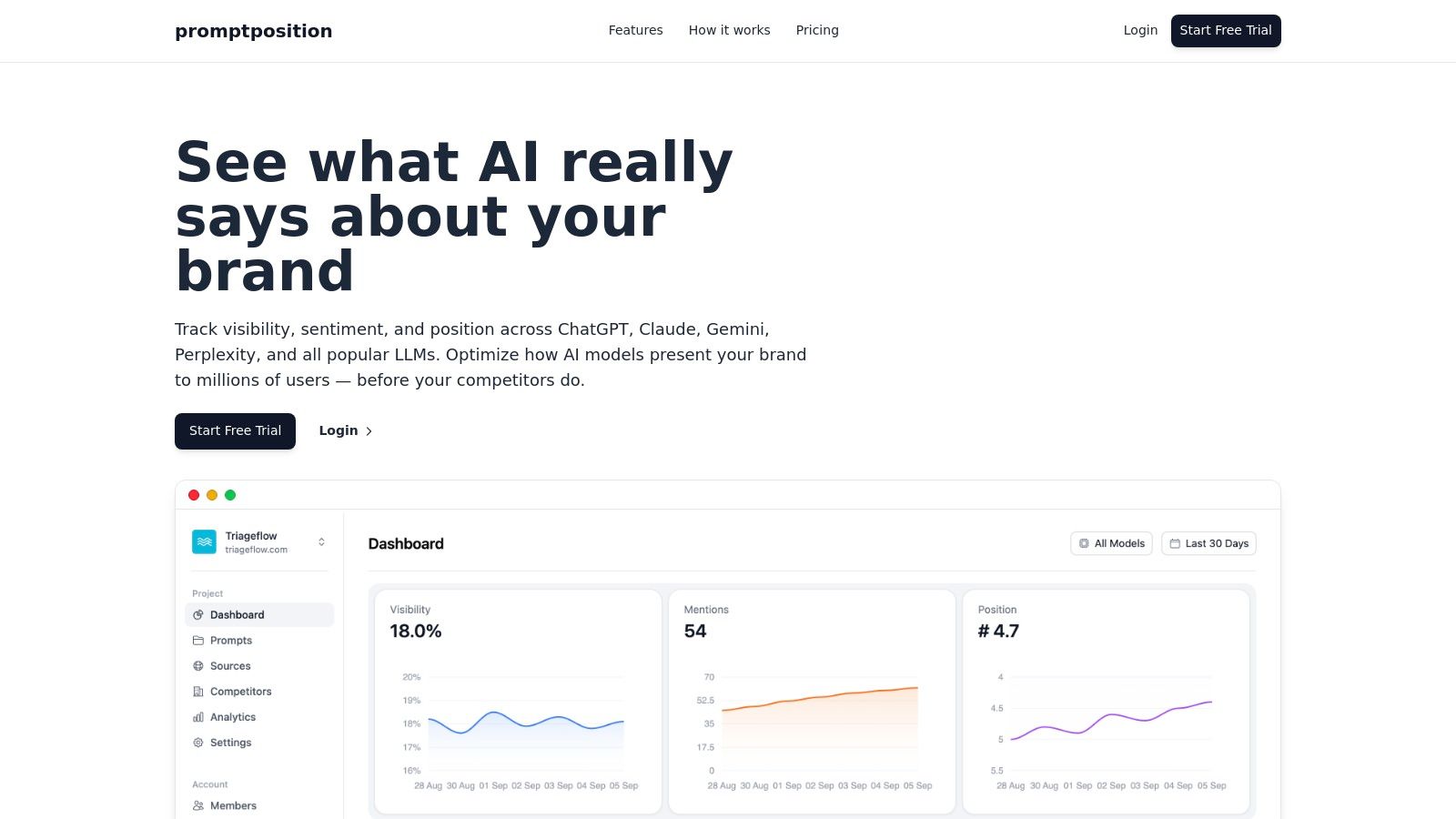
For teams serious about managing brand presence in the age of AI, promptposition delivers a specialized analytics platform built for this new reality. It moves beyond traditional SEO metrics to directly address the critical question: "What are large language models saying about our brand, and why?" By tracking visibility, sentiment, and cited sources across major LLMs like ChatGPT, Gemini, and Claude, it converts the opaque nature of AI responses into measurable KPIs. This allows marketing, PR, and SEO teams to stop guessing and start building a data-driven strategy for ai search optimization.
The platform is designed for action. It provides verbatim quotes, showing you the exact words AI models use to describe your company, which is essential for understanding your brand’s perceived strengths and weaknesses. Crucially, PromptPosition also identifies the specific sources (articles, websites, user-generated content) that influence these AI-generated narratives. This provides a clear roadmap for your content and public relations efforts, telling you precisely where to focus to change the conversation.
Key Strengths and Use Cases
promptposition excels at turning AI model behavior into a competitive advantage. Its daily data updates and direct competitor comparisons enable teams to spot opportunities and threats in near real-time. For instance, a brand manager can see if a competitor is suddenly being mentioned for a key use case where their brand is absent, signaling an urgent content gap.
Practical applications include:
- Brand and PR Measurement: Quantify how media placements and content updates affect your visibility and sentiment scores across different AI models.
- Competitive Intelligence: Analyze which sources LLMs cite for your competitors to reverse-engineer their AI strategy and find opportunities.
- Content Strategy: Prioritize content creation on the platforms that LLMs demonstrably trust and cite for your target topics.
- Closing the Loop: Use it as the measurement layer to see if your optimization efforts are actually changing how AI models talk about your brand.
The platform provides a solid foundation for teams looking to understand this new field; you can learn more about how to get started with an effective ai search engine optimization strategy on their blog.
Ideal User and Considerations
This tool is best suited for marketing leaders, brand strategists, and SEO professionals who need to measure and influence how their brand is portrayed in AI-driven answers. It bridges the gap between content efforts and AI outcomes.
A key thing to understand is that PromptPosition is the measurement layer that closes the loop on your optimization efforts. It provides the intelligence to guide your strategy, not a button to change AI outputs directly. Influencing models requires consistent, high-quality work in content and PR; the platform’s role is to make those efforts targeted and measurable.
Pricing is accessible, with a free trial to start. Paid plans begin at $49/month for the Starter tier (25 prompts, 2,250 monthly responses), scaling to the Pro plan at $119/month (100 prompts, 9,000 responses) and Enterprise plans from $299/month, which include API access and unlimited seats.
- Website: promptposition.com
2. Semrush
For teams already invested in a traditional SEO workflow, Semrush provides a familiar environment to begin exploring AI search optimization. Instead of starting from scratch, it layers AI visibility metrics onto its established toolset, making the transition feel more like an evolution than a complete overhaul. Semrush stands out by integrating AI Overview tracking directly into its Position Tracking and Organic Research tools, allowing you to see where your domain is cited in AI-generated answers alongside standard SERP rankings.
This integration is its core strength. You can filter keyword lists to isolate queries that trigger AI Overviews, providing a direct path to analyze your performance and spot competitive gaps. This approach helps teams understand how often their brand is mentioned or their content is sourced by Google's generative AI, directly within the platform they use for daily SEO tasks.
Practical Use & Limitations
The primary use case is augmenting existing SEO strategies. By activating the "AI Answers" filter in Position Tracking, you can monitor which of your target keywords are now generating AI Overviews and whether your domain appears.
Key Benefit: Semrush bridges the gap between classic SEO and AI visibility by showing AI-driven results within your existing keyword tracking dashboards. This simplifies the initial steps into AI search optimization without requiring a new platform.
However, some advanced AI features, like the dedicated "AI Mode" visibility report, are gated behind higher-tier plans (Guru and Business), which can be a hurdle for smaller teams. Initial configuration for tracking AI mentions also requires some setup and isn't a default, out-of-the-box report. While excellent for Google AI Overviews, it offers less insight into other LLMs like ChatGPT or Perplexity.
- Website: https://www.semrush.com
3. BrightEdge
For enterprise-level organizations, BrightEdge offers a structured and scalable approach to AI search optimization. As an early mover in this space, its platform was adapted to monitor Google's Search Generative Experience (SGE) from its initial rollout. The core of its offering is the BrightEdge Generative Parser, a technology built to detect, track, and forecast how AI Overviews impact SERPs and brand visibility.
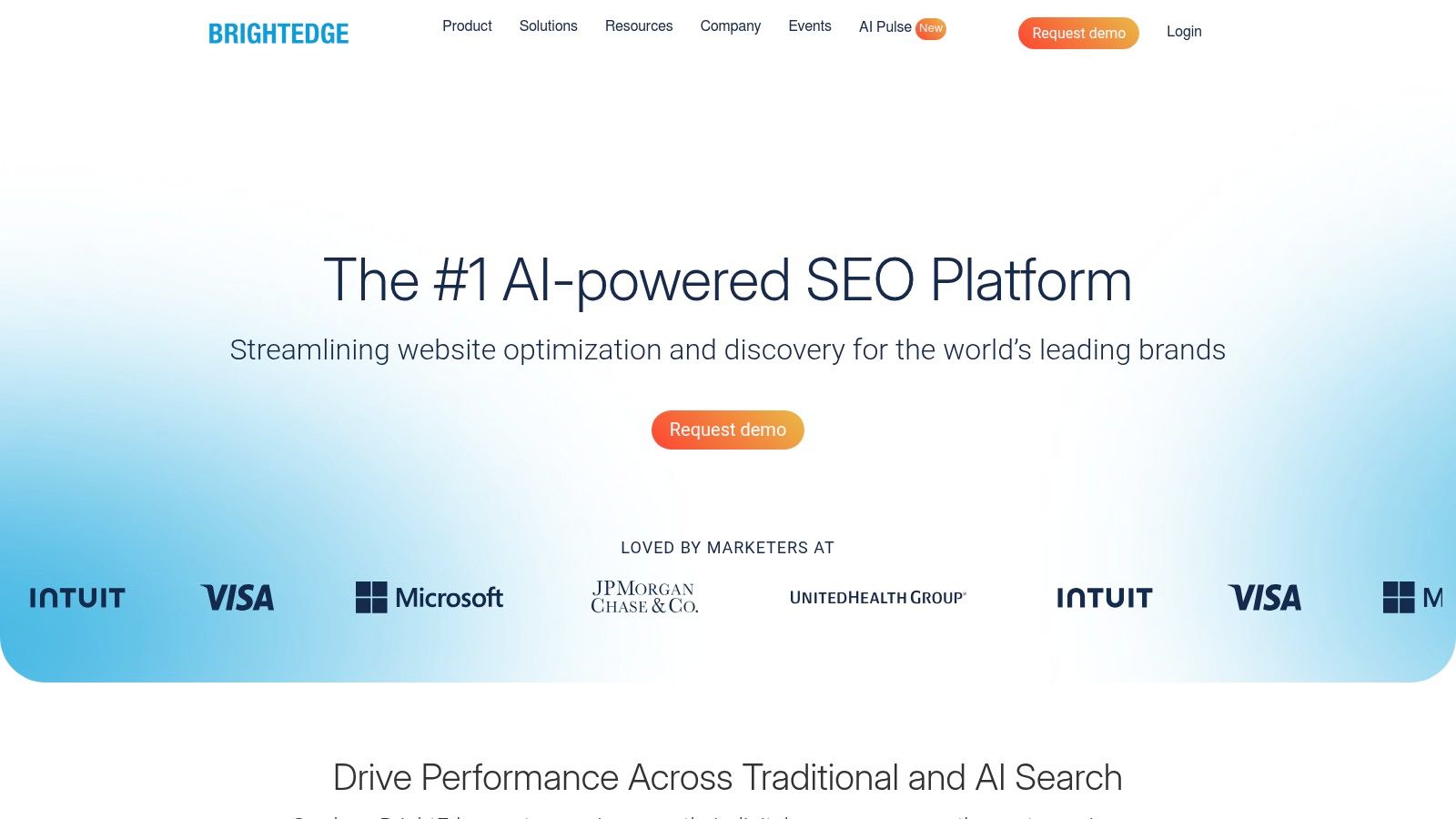
BrightEdge integrates these AI-driven insights directly into its established Data Cube and workflow tools, including its AI-powered BrightEdge Copilot. This allows large teams to analyze shifts in search visibility without leaving their primary SEO platform. The system helps pinpoint which user intents are most likely to trigger AI Overviews, providing a strategic advantage for prioritizing content that can be featured in these new answer formats. This process is a key part of what some now call generative engine optimization.
Practical Use & Limitations
The main application is for large-scale marketing teams to benchmark visibility shifts and adapt their content strategy to secure placement in AI Overviews. By using its query insights, you can identify informational topics that are prime candidates for AI sourcing and direct your content creation efforts accordingly.
Key Benefit: BrightEdge provides mature, enterprise-grade reporting for AI Overview visibility, making it possible to measure and react to generative AI's impact on search at a global scale.
The platform's primary drawback is its enterprise-first pricing and business model, which can be inaccessible for smaller businesses or agencies. Gaining full value also requires significant onboarding and process alignment within your organization, as the tool is deeply integrated into a broader SEO and content marketing workflow.
- Website: https://www.brightedge.com
4. seoClarity
For enterprise-level organizations, seoClarity offers a powerful suite for tying AI visibility directly to core business metrics like traffic and click-through rate. Its Clarity ArcAI feature is built to manage AI search optimization at scale, focusing on quantifying the business impact of Google's AI Overviews. The platform moves beyond simple presence tracking to measure how AIO appearances affect user behavior and competitive positioning.
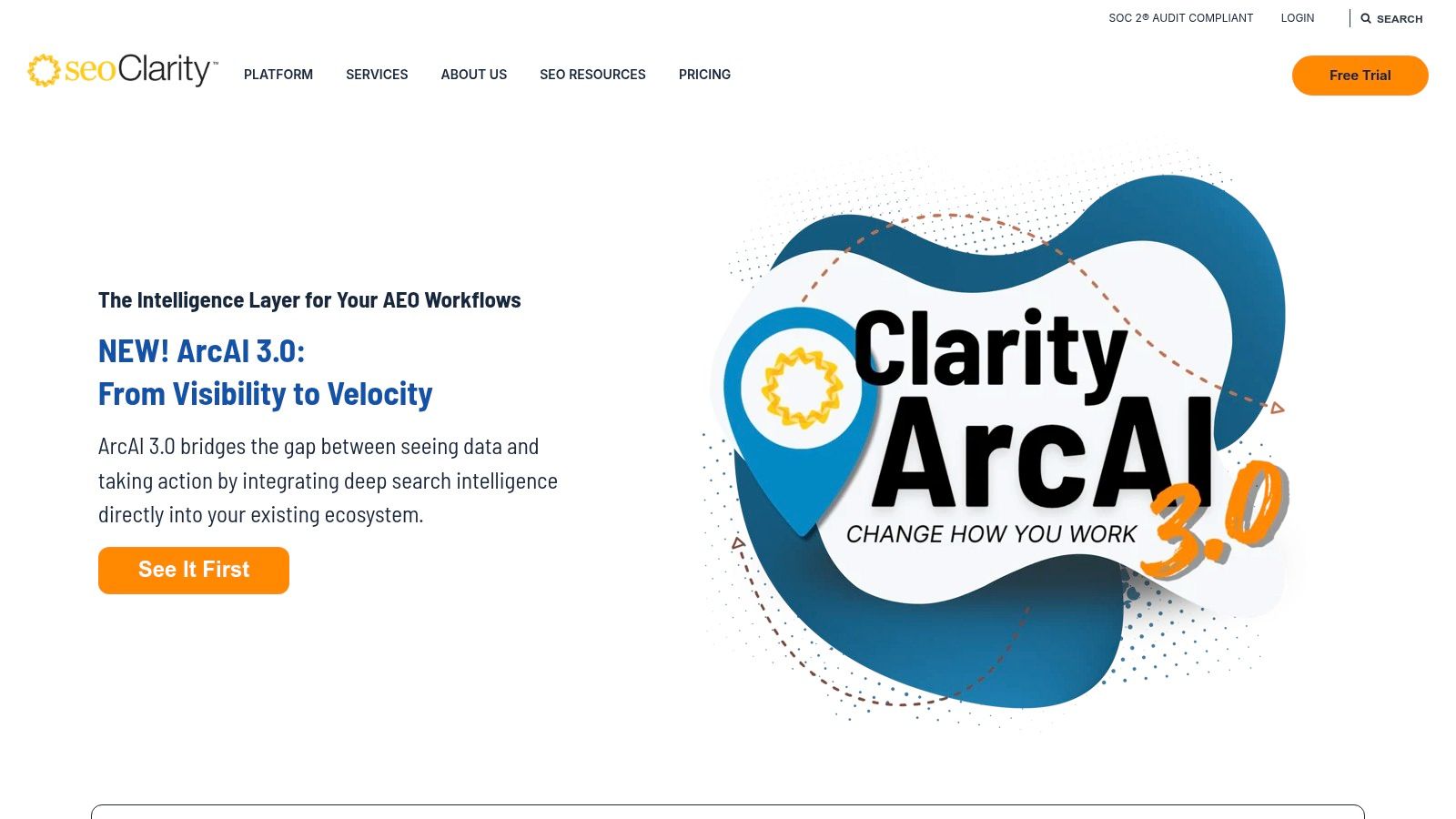
This connection to performance KPIs is its defining characteristic. seoClarity allows teams to analyze stored snapshots of AI Overviews to see which sources are cited, how brand messaging appears, and where competitors are gaining an edge. By integrating this with traditional rank tracking and traffic analytics, it provides a unified view of how generative AI is reshaping search performance across massive keyword sets.
Practical Use & Limitations
The main application is for large marketing teams to benchmark brand mentions and source citations within AI Overviews against their top competitors. The platform's Google AI Mode tracking and historical trend analysis enable strategic decisions based on how AIOs are evolving and impacting specific keyword categories over time.
Key Benefit: seoClarity directly connects AI Overview visibility to performance data like CTR and traffic, giving enterprise teams the tools to measure the financial impact of generative AI on their search channel.
The platform is designed for enterprise use, which means it may be overly complex for smaller businesses or those just starting their SEO journey. Pricing is not publicly available and requires a demo, reflecting its positioning as a high-end, consultative solution. Its focus is primarily on Google's AI Overviews, with less emphasis on other generative AI platforms.
- Website: https://www.seoclarity.net
5. SISTRIX
For teams looking for straightforward AI search optimization data within a well-regarded SEO suite, SISTRIX offers a direct and clean approach. It focuses on tracking Google’s AI Overviews across multiple international markets, making it a strong choice for global brands. The platform clearly identifies which of your tracked keywords trigger an AI Overview and, critically, whether your domain is cited within that generated answer.
The platform’s value lies in its simplicity and integration. Within its keyword tools, you can easily apply filters to see the percentage of your keyword set that now displays AI Overviews. This helps you quickly gauge the impact of generative AI on your specific market niche. SISTRIX also provides dedicated AI/Chatbot overview pages, allowing for deeper research into brand and domain visibility in AI-generated results, a key part of modern content strategy.
Practical Use & Limitations
The primary application is monitoring Google AI Overview exposure. By using the AI filter in the keyword section, teams can pinpoint which queries have changed and assess if their current content is being sourced by the AI. A beta feature for prompt monitoring shows the company is actively expanding its capabilities beyond just search engine results pages.
Key Benefit: SISTRIX provides clear, actionable data on Google AI Overview visibility across numerous countries, making it ideal for international SEO teams needing to track their AI footprint without a steep learning curve.
While its AI Overview detection is solid, the more advanced prompt tracking for other LLMs is still in beta and not yet a core feature. This means its current scope is primarily centered on Google's implementation. The depth of analysis into various LLMs is still growing compared to more specialized tools focused exclusively on chatbot analytics.
- Website: https://www.sistrix.com
6. Authoritas
For organizations that need direct, raw data access for business intelligence, Authoritas provides a technical foundation for AI search optimization. It moves beyond simple dashboard metrics by offering API-level access to its AI Overview findings, empowering teams to pipe that data directly into their own custom reports, BI tools, and internal systems. The platform excels at identifying when AI Overviews appear for tracked keywords and archiving daily SERP screenshots for historical analysis.
Its core advantage is this deep data integration. Instead of being confined to the platform's user interface, technical teams can query the SERPs API to extract complete AIO data, including all sources cited and their positions within the generative answer. This enables a granular level of analysis that is difficult to achieve otherwise, making it ideal for large-scale or highly customized tracking initiatives across multiple countries, including US-specific modes.
Practical Use & Limitations
The primary use case is for enterprise teams or agencies with developer resources who want to build custom AI visibility dashboards or integrate AIO source data into larger analytics stacks. The platform's filtering allows users to isolate keywords that trigger AI Overviews and examine the SERP evidence directly.
Key Benefit: Authoritas is built for data-driven teams, offering powerful API access that turns AI Overview tracking into a flexible data source for business intelligence and custom analytics.
However, its strengths are geared toward a technical audience. The platform is an enterprise-oriented solution, and fully using its API capabilities requires engineering resources, making it less accessible for smaller teams without development support. The initial setup and configuration to track and extract AI Overview data demand a more hands-on approach compared to more straightforward, out-of-the-box tools.
- Website: https://www.authoritas.com
7. SE Ranking
For small to mid-sized businesses and agencies seeking an affordable entry point into AI search analysis, SE Ranking provides an impressive suite of dedicated tools. It has moved quickly to build out its AI search optimization capabilities, offering specific modules that go beyond simply noting the presence of an AI Overview. The platform separates its analysis into an AI Overviews Tracker, an AI Results Tracker, and an AI Visibility Tracker, giving users granular ways to inspect their performance.
Its strength lies in providing multiple angles for analysis at a competitive price point. Users can track keyword-level presence in AI Overviews, see their rank within the AIO box itself, and monitor brand mentions across different AI platforms like Gemini and Perplexity. The inclusion of cached SERP snapshots and a dedicated "Sources" tab for competitor comparisons makes it a practical tool for tactical execution. These features are available on its Pro and Business plans, with a 14-day free trial offering a solid test run.
Practical Use & Limitations
The primary use case is for teams who need a cost-effective, all-in-one SEO tool that includes strong AI search monitoring. By using the AI Results Tracker, an agency can monitor not just its own clients' visibility but also compare it directly against competitors' mentions and linked sources across multiple AI engines.
Key Benefit: SE Ranking delivers a multi-faceted view of AI search visibility, including cross-platform tracking and competitor source analysis, making it an excellent value for SMBs and agencies.
While the platform is feature-rich, there is some mixed user feedback regarding data accuracy, particularly for niche industries, which may mean some findings require manual validation. The features are powerful but are not included in the base-level plan, requiring an upgrade to the Pro or Business tiers to access the full suite of AI analysis tools.
- Website: https://www.seranking.com
8. Yext
Yext approaches AI search optimization from a foundational data perspective, championing what it calls Answer Engine Optimization (AEO). Instead of tracking SERP fluctuations, its platform focuses on structuring and distributing validated brand facts so AI systems like search engines and chatbots can understand, trust, and accurately cite them. It centers this strategy on a central Knowledge Graph where businesses manage their core entity data, such as locations, products, events, and executive bios.
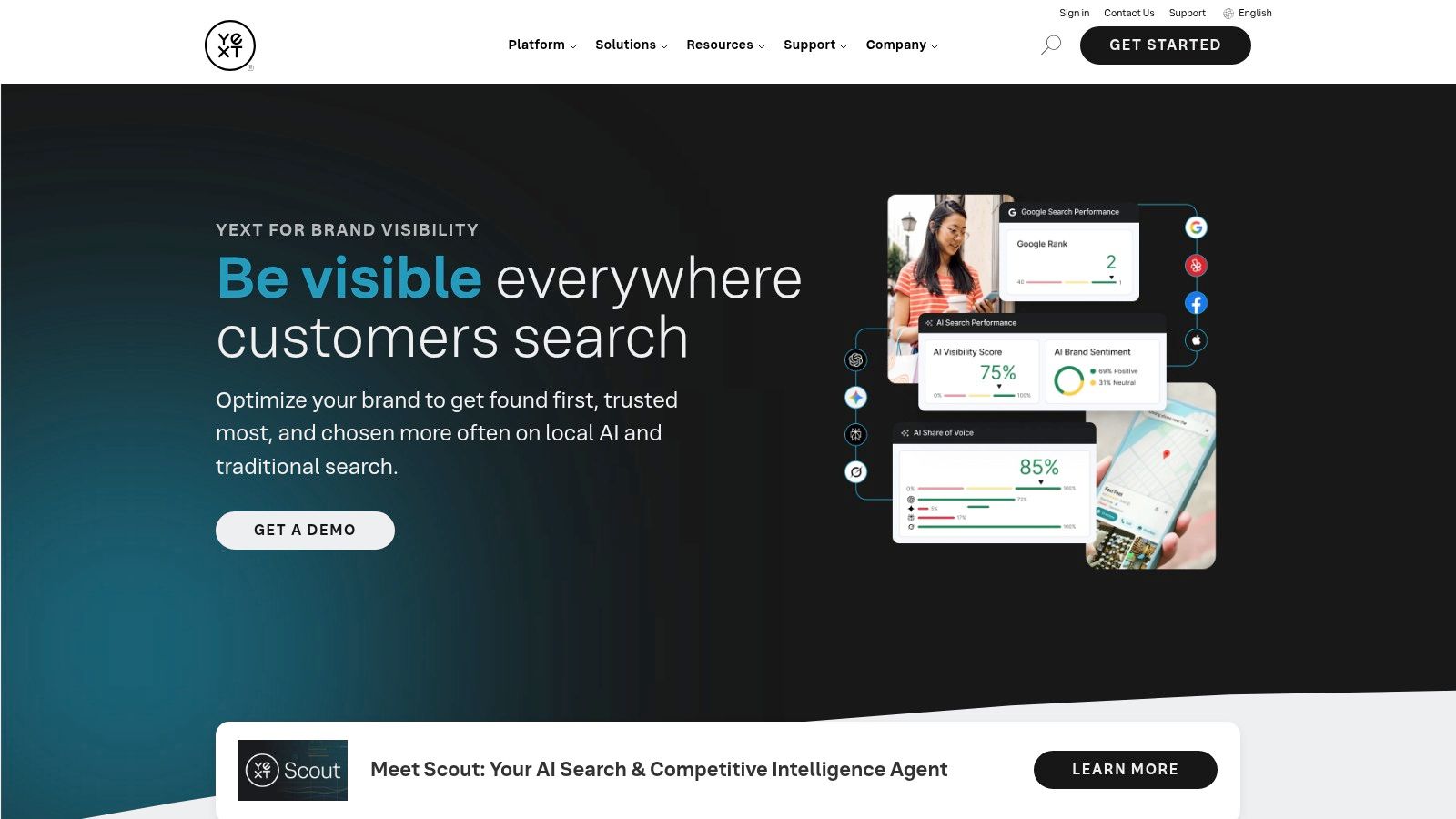
The platform’s core strength is its ability to syndicate this verified information across a large publisher network. By ensuring data consistency on hundreds of sites, Yext helps build the citation trust signals that generative AI models rely on. This proactive, structured data approach aims to make a brand the definitive source of truth about itself, reducing the risk of AI models hallucinating or citing incorrect third-party information.
Practical Use & Limitations
The primary use case is for multi-location or data-rich enterprises that need to control their brand information at scale. By managing all entities in one place and pushing updates everywhere, companies can ensure that AI assistants pull from the most current and accurate data available, whether it's for store hours, product specifications, or physician credentials.
Key Benefit: Yext provides a scalable system for managing and syndicating the structured entity data that serves as the factual bedrock for AI answers, making it a preventative tool against misinformation.
However, Yext is not an AI or SERP rank tracker; its impact on visibility is indirect and often takes time to materialize. The benefits are tied to the broad adoption of structured data and the effectiveness of its syndication network. It is less a tool for analyzing AI performance and more a platform for building the data infrastructure that powers correct AI responses.
- Website: https://www.yext.com
9. Schema App
While many tools focus on tracking AI outputs, Schema App addresses a foundational element of ai search optimization: structuring your data so that models can understand it in the first place. It provides an enterprise-grade solution for implementing and managing schema markup at scale. This structured data gives clarity to your site’s entities and content, directly feeding the knowledge graphs that generative models like Google’s AI Overviews rely on.
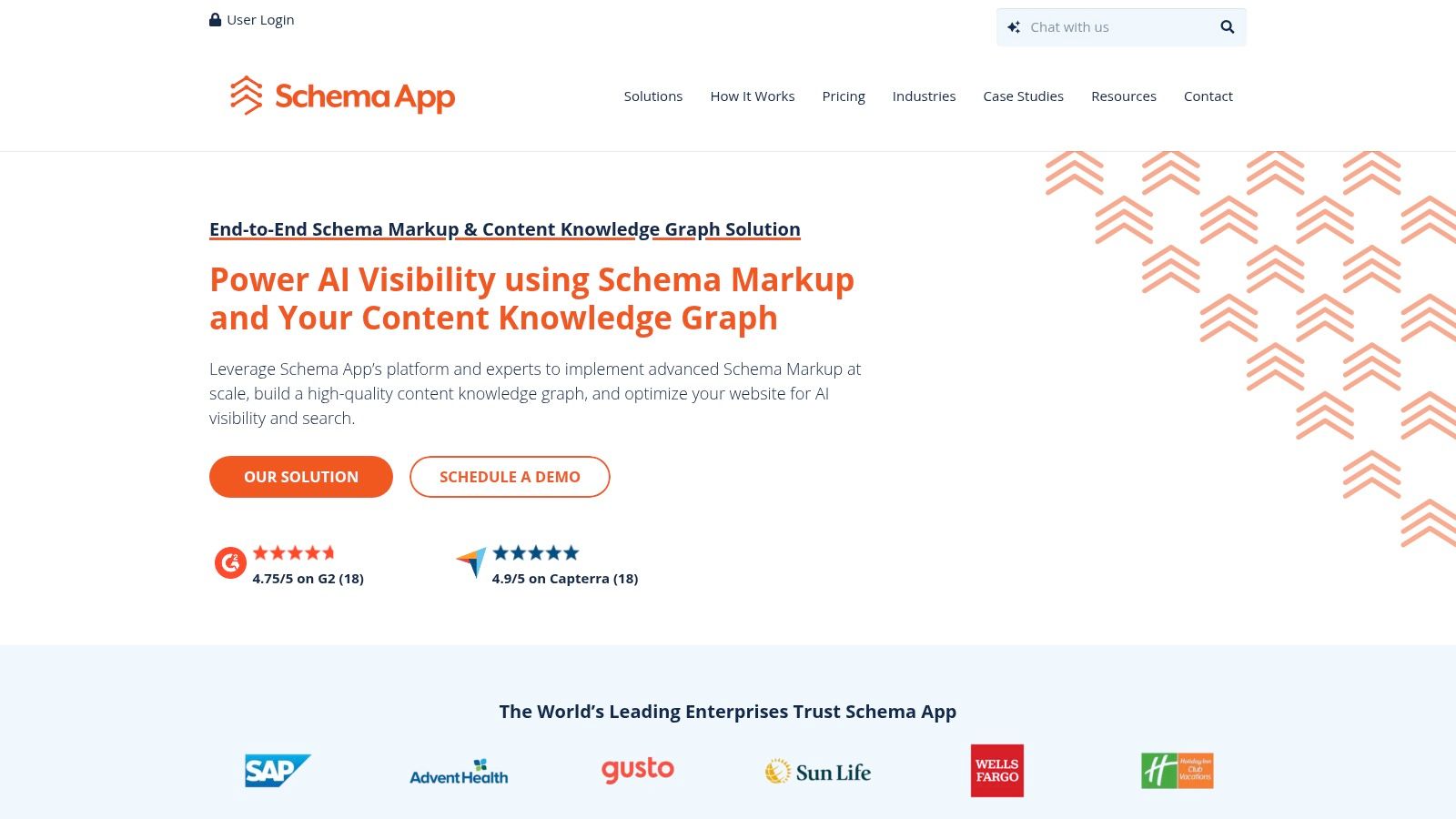
Its core purpose is to ensure your website's content is machine-readable, which is a critical prerequisite for being accurately sourced by AI. By creating a robust and interconnected knowledge graph for your own domain, you establish authority and context around your products, services, and expertise. The platform offers managed deployment tools and strategic playbooks that connect the practice of schema markup directly to improving visibility in AI-generated answers.
Practical Use & Limitations
The primary use case is for enterprises with large, complex websites to govern their structured data and prepare their content for AI consumption. Their Highlighter and Editor tools allow teams to deploy comprehensive markup without deep coding knowledge, while their reporting provides diagnostics to fix coverage gaps that could harm AI search visibility.
Key Benefit: Schema App helps you build the technical foundation needed for AI models to trust and cite your content by ensuring your entity information is clear, consistent, and well-structured. It's about proactive preparation, not just reactive tracking.
The tool is not a direct AI mention or rank tracker; it won't show you if you appeared in a specific AI Overview answer. Its focus is entirely on the input (your website's structured data) rather than the output (the AI's response). For teams needing to measure the direct impact of their schema work on AI visibility, it must be paired with a dedicated AI analytics platform like PromptPosition.
- Website: https://www.schemaapp.com
10. WordLift
For organizations aiming to influence AI from the ground up, WordLift offers a structural approach to AI search optimization. Instead of tracking mentions after the fact, its primary function is to build a machine-readable knowledge graph for your website. This process organizes your content around entities and their relationships, creating structured data that search engines and LLMs use to understand context and authority.
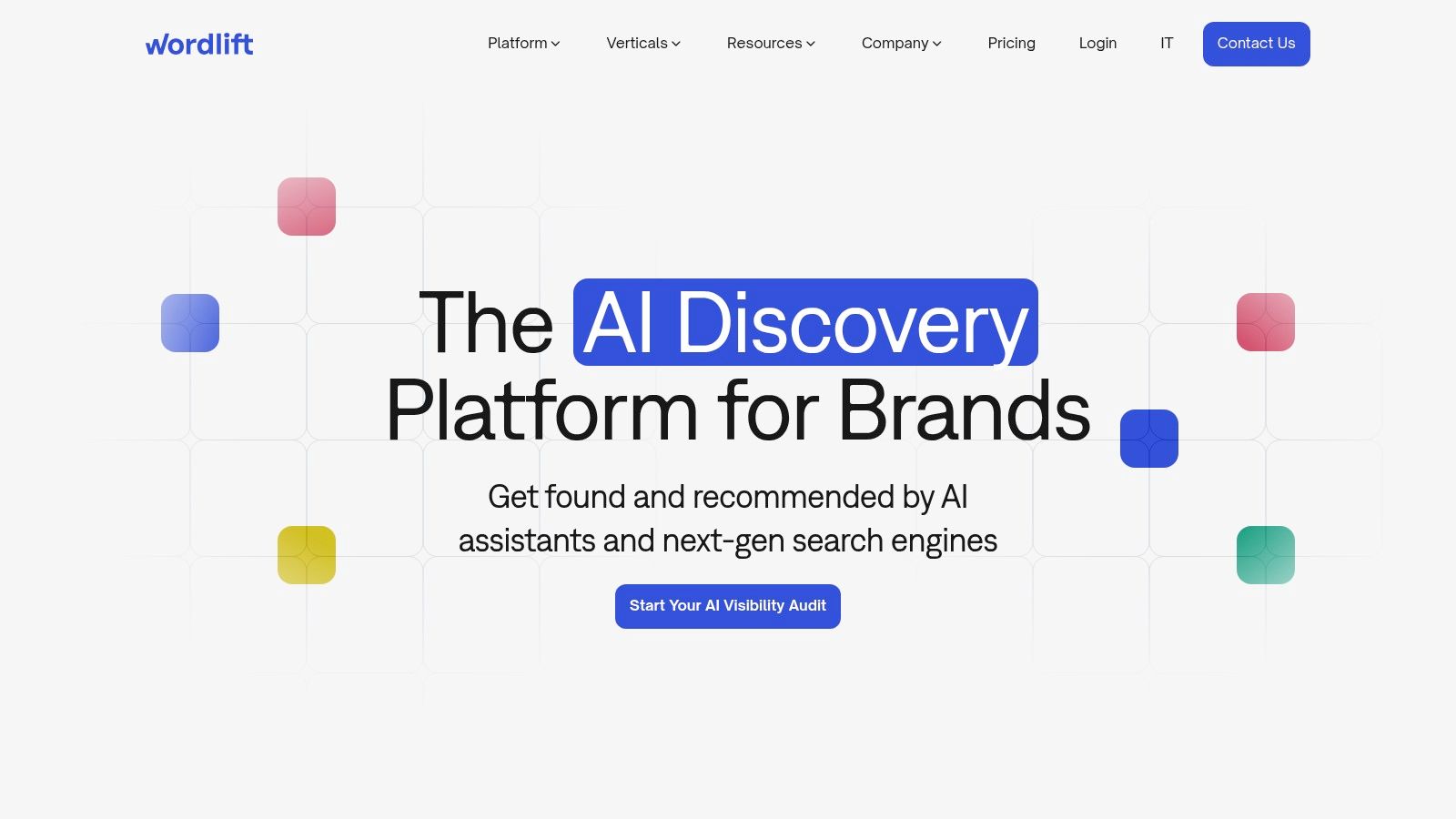
WordLift's strength lies in making the abstract concept of entity-based SEO operational. Through its WordPress plugin, it automatically annotates your content and generates the schema markup needed to define your brand, people, and products as distinct entities. This helps establish your site as a definitive source of information, which is a foundational step in getting an AI to trust and cite your content. Its approach focuses on preparing your content to be a primary source for conversational AI.
Practical Use & Limitations
The main use case is to build a robust data layer for your website that communicates directly with AI and search crawlers. By creating a custom knowledge graph, you are not just optimizing for keywords; you are building a semantic network that establishes your expertise and authority, making your content more likely to be used in AI-generated answers. It's a proactive strategy for those looking to understand how to rank on ChatGPT and similar models.
Key Benefit: WordLift provides the tools to build a foundational knowledge graph for your website, shifting your SEO efforts from simple keyword targeting to establishing your content as an authoritative source for AI systems.
The platform is focused on building the data structure, not on performance tracking. You will need a complementary tool like PromptPosition to measure whether your knowledge graph and entity optimization efforts are actually resulting in more citations within AI Overviews or other LLMs. While powerful, implementing an entity-first strategy requires a different mindset than traditional SEO and involves a learning curve.
- Website: https://www.wordlift.io
11. MarketMuse
MarketMuse shifts the focus of AI search optimization from tracking citations to building the foundational authority required to earn them. It uses AI to analyze your entire website, mapping its topical coverage and identifying content gaps. This strategic approach helps teams determine which subjects to own and how to structure comprehensive, answer-ready pages, a method that aligns directly with AEO principles of creating trustworthy, entity-rich content for generative models.
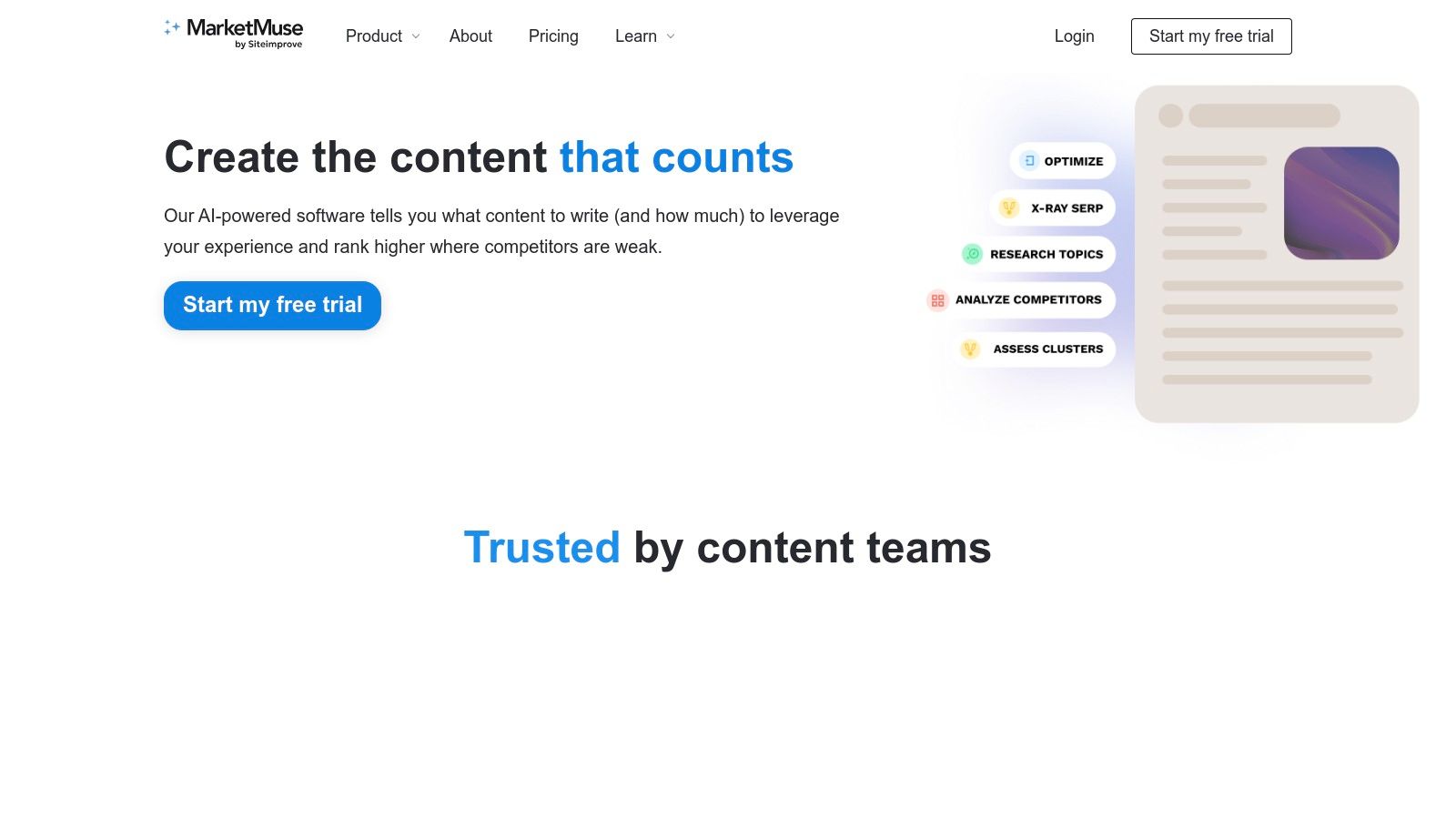
The platform's strength is its ability to provide a high-level strategic roadmap for content. Instead of just optimizing a single page, MarketMuse gives you a site-wide view of your authority, complete with personalized difficulty scores that assess your odds of ranking for a topic. This is essential for prioritizing which high-impact, answerable topics your team should pursue to become a recognized source for AI models. It also includes generative assistance in its Optimize application to build out the content.
Practical Use & Limitations
The primary use case is strategic content planning and authority building. By running a content inventory, you can see where your expertise is thin and get AI-powered briefs to create pillar pages and cluster content that demonstrate deep knowledge. This proactive strategy is a key part of AI-driven content optimization, as it builds the source credibility that LLMs look for.
Key Benefit: MarketMuse provides the strategic "why" and "what" behind content creation for AEO, helping you build the topical authority that makes your site a citable source for generative AI answers.
However, MarketMuse is not a citation tracking tool; it is a content strategy and optimization platform. It helps you create the right content but does not directly measure if that content appears in AI Overviews or chatbot responses. For that, you would need to pair it with a dedicated AIO analytics tool. Full feature access and pricing information also require engaging with their sales team via a demo, which is common for enterprise-focused software.
- Website: https://www.marketmuse.com
12. Frase
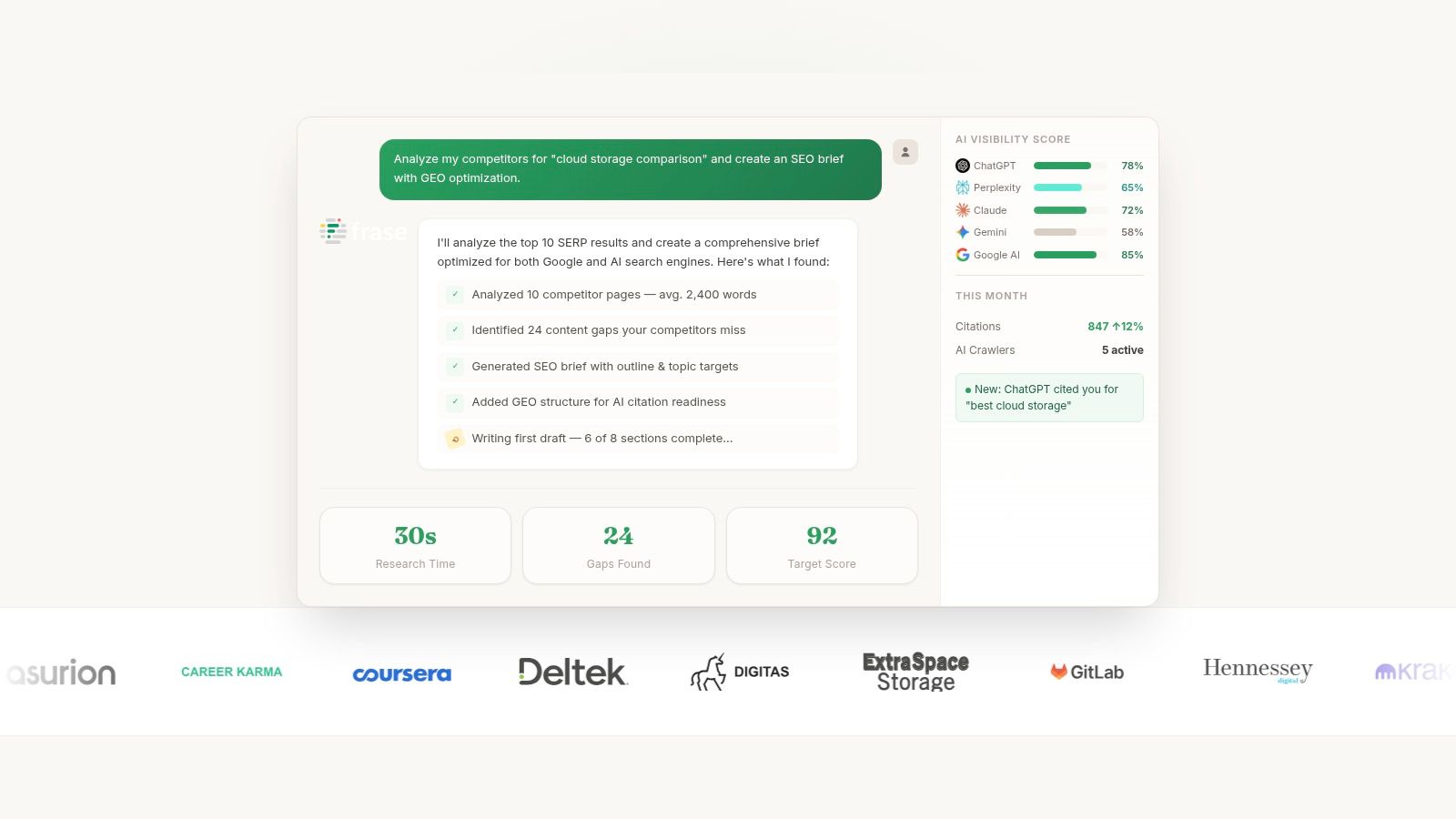
For content teams looking to proactively adapt their writing for generative engines, Frase offers a direct and practical toolkit. It shifts the focus from passive monitoring to active creation, providing AI-driven content briefs designed to help articles get cited by platforms like ChatGPT, Gemini, and Google's AI Overviews. The platform researches top-ranking content and structures its recommendations around answering user questions directly, a key factor in AI search optimization.
Frase stands out by creating a workflow specifically for writers aiming for Generative Engine Optimization (GEO). It generates Q&A-style outlines, identifies crucial entities to include, and provides a content editor that scores your draft against these targets. This helps writers build content that is not only optimized for traditional SERPs but is also structured logically for an LLM to parse and use as a source.
Practical Use & Limitations
The primary use case is building new content or optimizing existing pages to be more "citable" by AI. By using its AI-powered brief, a writer can quickly construct an article with a clear question-and-answer format, which anecdotally improves its chances of being featured in generative answers.
Key Benefit: Frase offers a fast, actionable workflow for writers to create content that addresses the structural and topical needs of both classic search engines and emerging generative AI experiences.
However, the tool is almost entirely focused on content creation and on-page optimization. It is not a platform for tracking or benchmarking AI visibility over time, lacking the large-scale monitoring capabilities of enterprise suites. Its strength is in preparing your content, not in measuring the outcome of your AI search optimization efforts across different models or prompts.
- Website: https://www.frase.io
AI Search Optimization — Top 12 Tools Comparison
| Platform | Core focus & unique features ✨ | AI visibility & sources | UX / Quality ★ | Target audience & Pricing 👥💰 |
|---|---|---|---|---|
| promptposition 🏆 | GEO-first AI search analytics; verbatim model quotes; daily visibility & sentiment ✨ | Multi-LLM coverage (ChatGPT, Claude, Gemini, Perplexity, Grok, DeepSeek), source breakdown, competitor gaps | ★★★★★ | 👥 Marketing/brand/PR/SEO teams; 💰 Starter $49 / Pro $119 / Enterprise $299+ (free trial, API) |
| Semrush | SEO toolkit extended with AI-overview detection & Position Tracking filters ✨ | Tracks Google AI Overviews, ChatGPT, Gemini, Perplexity; AIO detection by keyword | ★★★★ | 👥 SEOs & agencies; 💰 Tiered plans (AI features in higher tiers) |
| BrightEdge | Enterprise SGE/AIO parser + integrated forecasting (Data Cube/Copilot) ✨ | Enterprise-scale SGE/AIO monitoring, intent forecasting, citation trends | ★★★★ | 👥 Enterprise SEO & content teams; 💰 Enterprise pricing/onboarding |
| seoClarity | Clarity ArcAI ties AIO presence to CTR/traffic with snapshots & benchmarking ✨ | AIO presence by keyword/date, stored content snapshots, brand vs competitor citations | ★★★★ | 👥 Large SEO teams/enterprises; 💰 Demo / enterprise plans |
| SISTRIX | Market-level AIO tracking with AI/chat research and prompt monitoring (beta) ✨ | Multi-country AIO detection, domain citation visibility, emerging LLM coverage | ★★★ | 👥 International SEOs/agencies; 💰 Subscription tiers (mid-market to enterprise) |
| Authoritas | AIO filters + daily screenshots and enhanced SERPs API for BI integration ✨ | Raw AIO data via API, AIO-enabled ranking configs, multi-country tracking | ★★★ | 👥 BI/technical SEO teams; 💰 Enterprise-focused (API/setup costs) |
| SE Ranking | Modular AI-search suites (AIO Tracker, AI Results, AI Visibility) ✨ | Cross-platform AIO monitoring (AIO, ChatGPT, Gemini, Perplexity), cached SERPs | ★★★★ | 👥 SMBs & agencies; 💰 Affordable plans, 14-day trial |
| Yext | Knowledge Graph & listings for AEO — centralize and syndicate verified brand facts ✨ | Strengthens citation trust via publisher network; indirect AIO impact | ★★★★ | 👥 Multi-location & data-rich brands; 💰 Mid–enterprise pricing |
| Schema App | Managed schema & knowledge-graph governance with playbooks for AI alignment ✨ | Improves entity clarity for AIOs (implementation-focused, not tracker) | ★★★★ | 👥 Complex/enterprise sites; 💰 Enterprise pricing |
| WordLift | Automated schema & site knowledge graph (WordPress plugin + API) ✨ | Entity-first markup to help models interpret content (not AIO tracker) | ★★★ | 👥 WordPress publishers & SMBs; 💰 Plugin/API plans |
| MarketMuse | Topical authority mapping & content briefs to prioritize answer-ready pages ✨ | Aligns content strategy with AEO/GEO needs (content-first, not tracker) | ★★★★ | 👥 Content strategists & enterprise; 💰 Demo / tiered pricing |
| Frase | GEO/AEO content briefs and editor for answer-style, entity-rich pages ✨ | Optimizes content for citations across ChatGPT, Perplexity, Gemini, AIOs | ★★★★ | 👥 Writers, SMBs & agencies; 💰 Subscription plans (affordable) |
Final Thoughts
We've journeyed through the developing practice of AI search optimization, moving beyond simple keyword tactics into the complex world of influencing Large Language Models. This isn't just a new channel; it's a fundamental shift in how information is found, synthesized, and presented to your audience. The platforms we've explored, from specialized LLM monitoring tools like PromptPosition to established SEO suites adding AI features, represent the first wave of solutions designed to navigate this new terrain.
The core takeaway is that passivity is no longer an option. Brands that wait for AI-driven search to mature will find themselves conspicuously absent from the conversations that matter. Proactive AI search optimization is about building a presence where the models are looking, creating content that is clear and authoritative, and structuring data so it can be easily understood and cited.
Your Path Forward: From Insight to Action
Selecting the right toolstack is a critical step, but it's just the beginning. The real work lies in creating a strategic feedback loop:
- Identify High-Value Prompts: Start by understanding the questions your target audience is asking AI. What problems are they trying to solve? What comparisons are they making?
- Analyze the Source Landscape: Use a measurement tool like PromptPosition to see which websites, articles, and data sources the AI models currently trust and cite for those prompts. This is your new competitive battlefield.
- Create and Optimize Content: Develop content specifically for those trusted source platforms. This might mean getting featured in a key publication, contributing to a specific forum, or ensuring your product data is listed on a cited review site.
- Structure for Success: Implement robust structured data using tools like Schema App or WordLift. This makes your content machine-readable, increasing the likelihood of it being used accurately as a source.
- Measure and Iterate: This is the most important step. Track your visibility within AI responses over time using a tool like PromptPosition. Are your optimization efforts working? Are you being mentioned more often? This dedicated measurement layer is essential to prove ROI and refine your strategy.
Making the Right Choice for Your Team
The "best" tool depends entirely on your specific context. An enterprise brand manager needs different historical data and scalability than a startup founder trying to make an initial impact. A digital agency juggling multiple clients requires robust reporting and multi-country support.
Revisit the comparison matrix and use-case recommendations in this article. Consider your budget, technical resources, and primary business goals. Do you need to fix your visibility in local search results first (Yext)? Or do you need to prove to leadership that your brand is losing ground in generative AI answers? To continuously refine your AI search optimization strategy and discover additional resources, exploring various other best SEO tools can provide a wider perspective on the available technology.
Ultimately, the goal of AI search optimization is to earn your brand's place in the new answer engine. It requires a blend of classic SEO principles, a deep understanding of content authority, and a commitment to meticulous measurement. The brands that master this discipline won't just rank; they will become the definitive answer.
Ready to stop guessing and start measuring your brand's visibility in AI search? promptposition provides the critical measurement layer for your AI search optimization efforts, showing you exactly how models like ChatGPT and Google's Gemini talk about your brand, your competitors, and your market. See where you stand and track your progress by visiting promptposition to see how it works.